Side effects & complications
Follicular Unit Extraction (FUE) surgery is an effective hair loss treatment to help you regain your appearance and self-confidence. This guide contains everything you should know about the potential side effects and complications of this procedure, including what to expect in the short term, the long term, and in rare cases.
Reviewed by Dr Epameinondas Bonaros, GMC-registered (7566786).
Short-term side effects
There are several short-term side effects you can expect after your FUE hair transplant surgery. These are completely normal, common to the healing process, and should subside relatively quickly with proper aftercare.
Mild swelling is a common side effect of hair transplant surgery. It typically affects the scalp and forehead and can sometimes occur around the eyes. Swelling generally subsides within the first few days to a week after surgery. You can help reduce swelling by keeping your head elevated.
You are likely to experience some mild pain or discomfort in both the donor and recipient areas, at the top and back of the head. This usually subsides after a few days to a week. Your surgeon may prescribe medication to help you manage any discomfort.
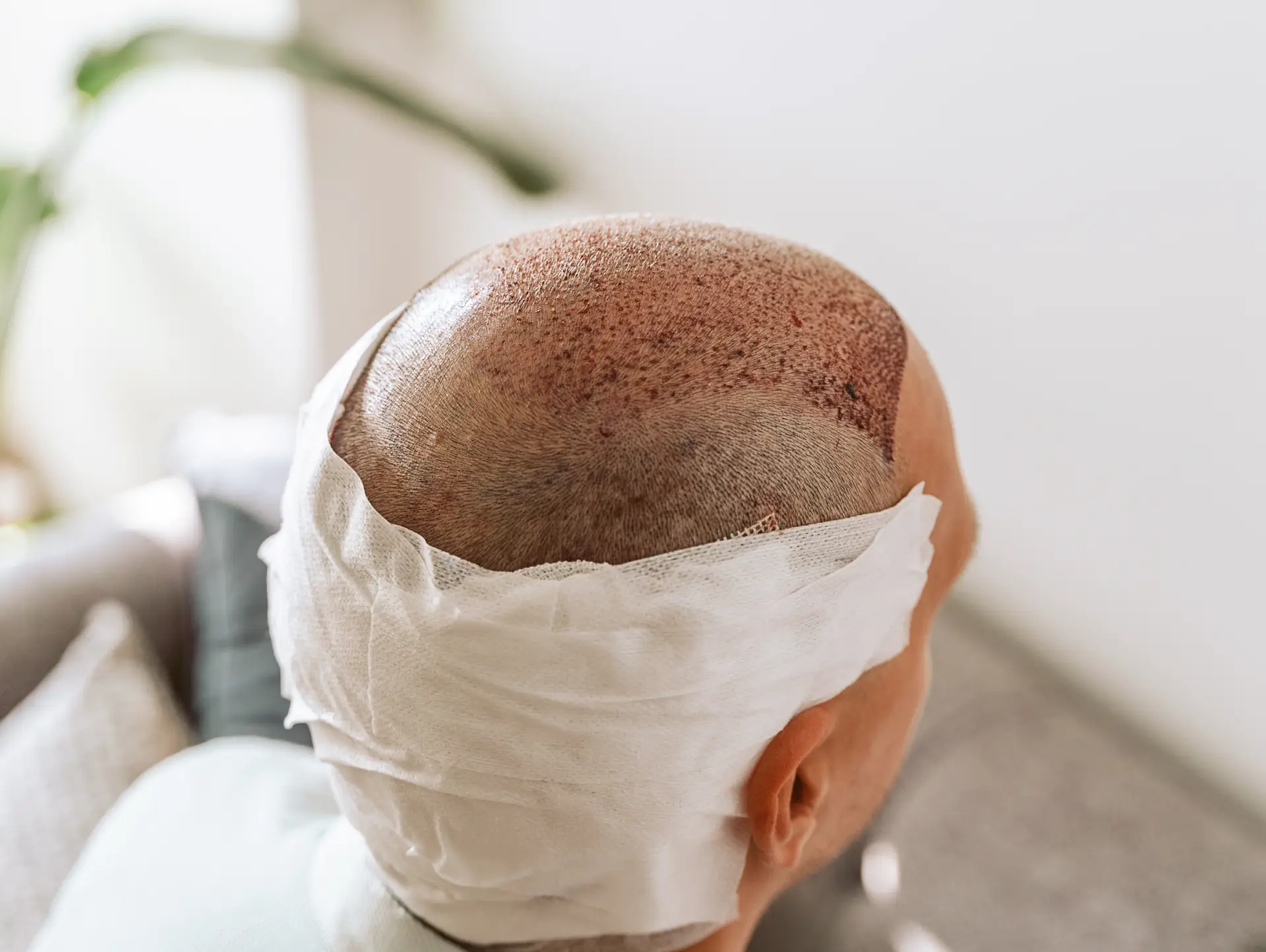
An FUE hair transplant involves making small punctures or incisions in the donor and recipient areas. This can cause minor bleeding for the first few hours after surgery. You can help reduce bleeding by applying gentle pressure to the area.
Small scabs may form around your transplanted hair follicles. This is especially likely if you experience postoperative bleeding. Scabs will typically fall off within a week or two. To help prevent infection and ensure proper healing, it is best to avoid picking at them.
As with most surgical procedures, hair transplant surgery causes inflammation. This often results in visible redness in the recipient area. This usually fades within a few weeks as your scalp heals.
Numbness in the donor and recipient areas is a natural response caused by nerve disruption during hair transplantation. This usually resolves by itself within the first few weeks to months of your recovery.
The trauma of a hair transplant can cause temporary shedding in the recipient area. This usually occurs within the first two to four weeks after surgery. You should experience new growth within a few months.
Itching often occurs during the first week or two after your procedure and is a good sign that your body is healing. Avoid scratching the donor or recipient areas, as this can disturb or dislodge the hair grafts. A mild shampoo can help soothe itching during the healing process.
In extremely rare cases, under one percent of all hair transplant procedures, patients can experience uncontrollable hiccups after surgery. This can last anywhere from several hours to a few days.
Inflammation of the hair follicles, known as folliculitis, can occur in the first few weeks after surgery as new hair starts to grow. Mild cases often resolve on their own, but severe cases may require antibiotics or anti-inflammatory treatment. Consult your specialist for advice if it develops.
Long-term effects
Most patients do not experience many hair transplant side effects in the long term. Often, a surgeon's skill and technique will impact the severity of any long-term side effects that do occur.
FUE is a minimally invasive procedure that involves individual hair follicle extraction. This results in small, dot-like scars at the donor site. While these scars are permanent, they are usually unnoticeable and easily covered by hair.
Transplanted hair may grow at different rates, causing your hair to look temporarily uneven. This usually normalises over six to twelve months as the growth cycles settle.
Potential complications
Although unlikely, it is possible to experience complications with a hair transplant. As with any procedure, general complications can occur during surgery, and there are also some issues to look out for during your recovery.
A hair transplant-related allergic reaction is possible but very rare. Patients may be allergic to the local anaesthetic used during the procedure or to medication prescribed for recovery. It is important to inform your surgeon of any known allergies and to report symptoms such as severe rashes, itching or swelling as soon as possible.
Infection is a potential risk for all surgical procedures, including hair transplants, and is often the result of poor hygiene and wound care. Germs and bacteria can enter incisions at the donor and recipient sites, causing localised infections to develop. Infection rates after FUE transplants are generally low, though patients with pre-existing medical conditions may be at a slightly higher risk. Keeping your grafts clean and avoiding touching or scratching your scalp helps prevent infection.
During the healing process, some patients may develop keloids, which are thick, raised areas of scar tissue. This is rare and usually influenced by genetic predisposition. Consult your surgeon for advice if you or a family member has a history of keloid scarring.
In rare cases, permanent nerve damage can occur during hair restoration surgery. This can result in chronic pain and hyperesthesia, meaning hypersensitivity, in the donor or recipient areas.
Subdermal cysts, forming below the surface of the skin, can develop when implanted hair follicles become trapped under skin cells. These fluid-filled sacs often subside without treatment after a few weeks or months, though persistent or painful cysts may require medical attention.
Over-harvesting of hair follicles can lead to visible thinning in the donor area. Surgeons are specially trained to extract hair evenly to minimise this risk. Donor area thinning can be permanent, depending on how many follicles are extracted from a concentrated area.
An inexperienced hair transplant can lead to unnatural-looking results, such as hair growing irregularly. Common examples include a hairline set too low on the forehead, or follicles transplanted at unnatural angles or directions. This can lead to patient dissatisfaction and, in some cases, may require further procedures to correct.

Frequently Asked Questions
Common questions patients ask about side effects, complications and recovery after an FUE hair transplant.
Achieving the best possible result comes down to a combination of surgeon selection and your own aftercare:
See our full Aftercare Guide for the day-by-day recovery routine.
In the vast majority of cases, no. Side effects such as swelling, redness, scabbing, numbness and shock loss are temporary and resolve during the normal healing period. Permanent problems are rare and are almost always linked to poor surgical planning or technique — another reason to choose a specialist surgeon.
Existing hairs near the transplanted area can sometimes go through temporary shock loss and shed a few weeks after surgery, before regrowing normally as they return to their natural hair growth cycle. Careful graft placement between existing hairs, using fine instruments, minimises this risk.
Infection is uncommon, but you should contact the clinic promptly if you notice:
Early treatment with the right antibiotics resolves almost all cases without any impact on the final result.
Contact the clinic straight away. Our 24/7 helpline is there precisely so that any concerning symptom — severe pain, heavy bleeding, spreading redness or signs of infection — can be assessed quickly and managed early. Do not wait for the next scheduled follow-up if something feels wrong.
Early regrowth typically begins around three to four months after surgery, with steady improvement in density from six months. Full, mature results usually develop by 12 to 18 months, when the transplanted hair has grown, thickened and settled into its final appearance. If you have specific questions about your own timeline, Contact us.
WhatsApp us