


Does a FUE Hair Transplant Leave Scars?
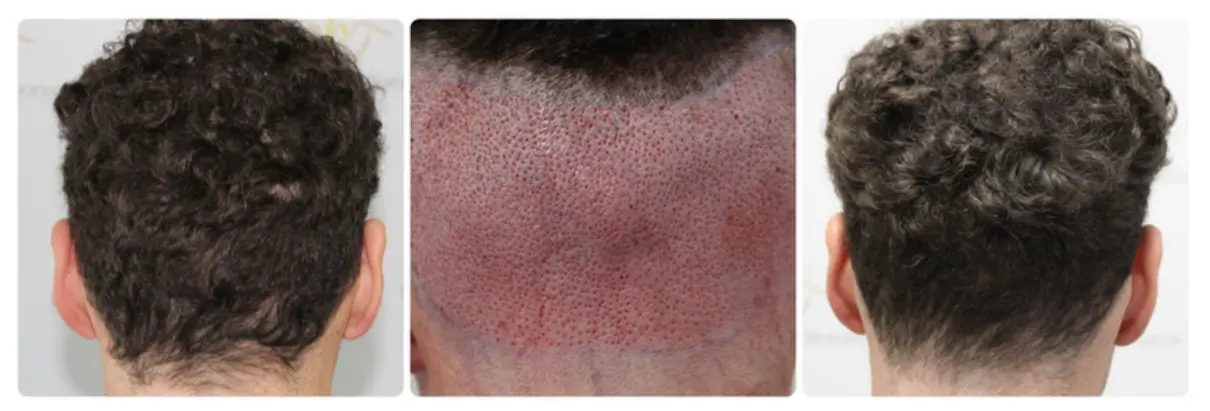
If you’re considering a hair transplant, one of the most common concerns is scarring, specifically, does a FUE hair transplant leave scars? The most straightforward answer is: yes, it does.
The good news is that these scars can be extremely subtle.
When the procedure is performed correctly by a skilled surgeon, like Dr Epameinondas Bonaros, the marks are very fine. In most cases, they’re virtually undetectable to the naked eye. This is especially true once the surrounding hair grows back to a suitable length.
Read on as we take a closer look at how FUE scars form, what they typically look like, and what you can do to reduce their appearance after surgery.
Reviewed by Dr Epameinondas Bonaros
Table of Contents
Why Scarring Happens After an FUE Procedure
You may wonder, if FUE is such a revolutionary hair transplantation technique, why does FUE leave scars?
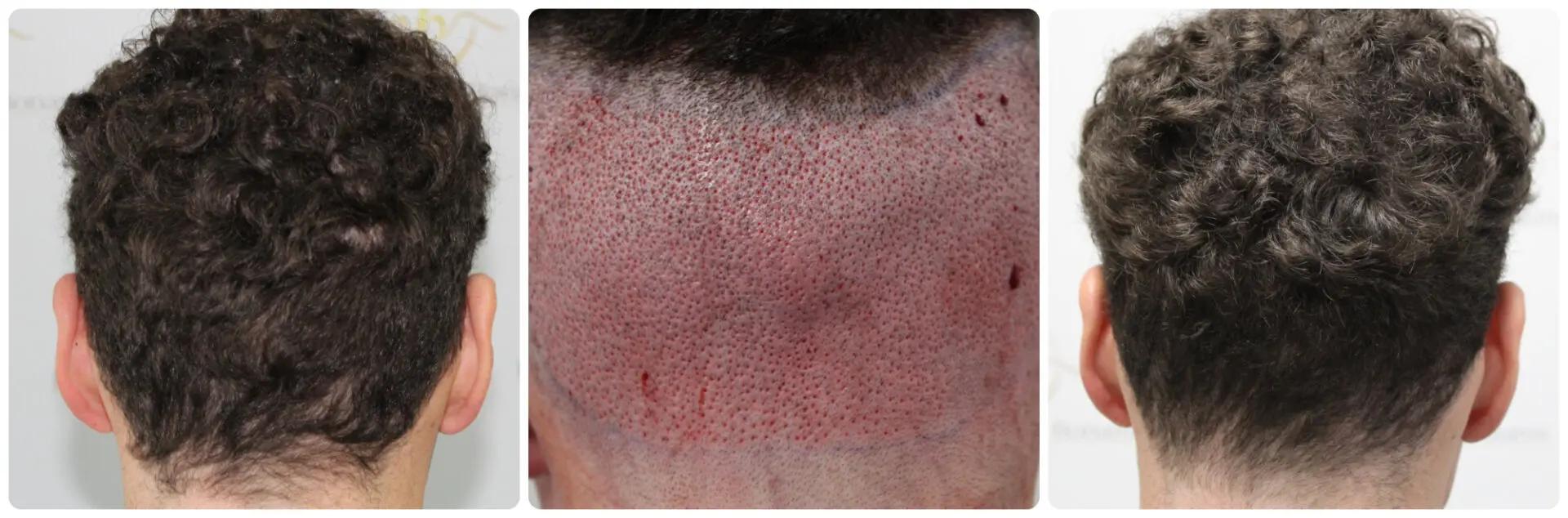
Despite its minimally invasive approach, FUE still involves making tiny circular incisions to extract individual hair follicles with a micro-punch tool. Depending on the level of restoration needed, too many hair follicles may be required at once, thereby creating a larger scarred area. Even the most minor cuts can leave subtle marks during the healing process.
Usually less than 1 millimetre in diameter, these dot-like scars can add up to hundreds, depending on the number of grafts required.
However, FUE hair transplant scar tissue is typically hidden by surrounding hair, so it is harder to see.
FUT vs FUE Scarring
Before Follicular Unit Extraction became the standard, Follicular Unit Transplantation (FUT) was the most commonly used method in hair restoration and transplanted hair.
Often referred to as “strip surgery,” FUT hair transplants involve:
- Removing a strip of hair-bearing skin from the back of the scalp.
- The strip is then dissected under a microscope to isolate individual follicular units.
- The donor area is then stitched closed, resulting in a small but permanent linear scar at the back of the head.
| Method | Type of Scar | Visibility with Longer Hair | Visibility with Shorter Hair |
|---|---|---|---|
| FUT (Strip Method) | Linear scar along the donor area. | Usually easy to conceal with longer hairstyles. | More noticeable with short styles (e.g., high fade). |
| FUE (Follicular Unit Extraction) | Tiny, dot-like scars scattered across the donor area. | Hardly visible. | Much less noticeable than FUT, even with short haircuts. |
Beware of Misleading Claims About Hair Transplant Scars
Be cautious of pop-up ads and websites that promote “scarless” surgeries. These messages are misleading and opportunistic.
To emphasise, hair transplant FUE scars are unavoidable. The International Society of Hair Restoration Surgeons (ISHRS) makes this clear in the first chapter of its 2019 FUE Guidelines. It notes:
“FUE is not a scarless surgery” and warns that “scarring (hypopigmentation) is likely to occur.”
It’s essential for patients to have realistic expectations and to consult with certified professionals who are transparent about the outcomes and potential scarring involved.
Factors Influencing Scar Visibility
While Follicular Unit Excision hair transplants are known for their minimal scarring, several factors can affect the visibility of these fine marks after healing. Scars may vary due to:
- Surgeon’s skill and experience: Your surgeon’s expertise is crucial in minimising scar visibility. Experienced surgeons skillfully extract hair follicles, ensuring that the scars are well-concealed by surrounding hair.
- FUE equipment: State-of-the-art FUE equipment allows surgeons to make more precise incisions, reducing trauma to the scalp. The use of micro-punch tools means that the resulting scars are reduced in size and heal more effectively. Minimising trauma during extraction helps to reduce the overall visibility of scars and aids recovery times.
- Hair length: The scars are generally not noticeable unless the hair is cut very short. Most patients can maintain a natural look with a hair length of grade 1 or 2.
- Healing process: Post-surgical care and individual healing rates affect scar visibility. Proper wound care and following medical advice can enhance healing and reduce the prominence of hair transplant scars.
Minimising FUE Transplant Scars
Here are steps you can take to help reduce visible scarring.
- Pre-Surgical Planning: Choose a qualified, experienced hair transplant surgeon. They will ensure that the extraction pattern is well-distributed to avoid visible patterns of hair loss in the donor area. Your doctor should also provide clear preoperative instructions to prepare you for the FUE hair transplant surgery.
- Post-operative care: Adhere to post-operative guidelines for optimal healing, such as avoiding direct sun exposure and keeping the area clean.
- Scalp micropigmentation: As you can’t completely “fix” scarring, you may consider scalp micropigmentation as an alternative. This type of medical tattooing can hide small scars. The treatment colours the scars to match your natural hair tone, blending them with your hair.
Achieve natural hair growth without the worry of visible scarring. Submit your photos now for a free, no-obligation FUE hair transplant quote using our assessment form.


Dr Bonaros: UK’s Top Clinic for FUE Hair Transplant Surgery
At the Dr Bonaros Hair Transplant Clinic, we use advanced surgical techniques in our FUE hair transplant surgeries. We deliver results that restore confidence and improve quality of life through our patient-first consultations, built on trust, integrity and clinical excellence.
Dr Bonaros holds membership in the British Association of Hair Restoration Surgery (BAHRS) and serves as Scotland’s only member at ISHRS. He maintains a diplomate certification with the American Board of Hair Restoration Surgery (ABHRS), the field’s only recognised board qualification. You can schedule a consultation with Dr Bonaros for personalised advice and treatment options.
Dr Bonaros’s clinic is also proud to offer numerous other treatments, including female hair transplant surgery, beard restoration, non-surgical procedures and transgender hair transplant surgery. Each procedure is carefully tailored to your needs with our patient-first approach.
Have more questions, like “Does a FUE hair transplant leave scars?” Visit our hair loss resource library.
About the Medical Reviewer
This content was written and medically reviewed by Dr. Epameinondas Bonaros, a hair restoration specialist based in Glasgow.
Dr. Bonaros is a GMC-Registered Doctor (No. 7566786), a Diplomate of the ABHRS, and a Full Member of the ISHRS. Dr. Bonaros personally performs every FUE procedure at his clinic to ensure the highest standards of safety and clinical excellence.
Last medically reviewed: December 2025