Chat with us on WhatsApp

Female Pattern Hair Loss — Causes, Symptoms & Treatments

Reviewed by Dr Epameinondas Bonaros

The typical appearance of female hair pattern baldness is diffuse thinning (overall hair loss and reduced density) in areas over the top of the scalp. Androgenetic alopecia (AGA) occurs in many women and is also known as female pattern hair loss (FPHL). Female pattern baldness can begin at any age, from adolescence through middle age. AGA patterns in women are significantly different from male pattern baldness. 

Read on to learn more about AGA, including alopecia causes in females and the best female pattern baldness treatment options.

Table of Contents

What is Female Pattern Baldness?

Female pattern baldness occurs in countless women and individuals assigned female at birth. 

Androgenic alopecia is the most common type of hair loss and occurs when the growth, or anagen phase, is shortened and hair follicles shrink. Over time, the hair shaft becomes thinner and shorter.

The Difference Between Female & Male Pattern Baldness

Signs and patterns of hair loss are different between males and females.

Feature Female Pattern Baldness Male Pattern Baldness
Pattern Diffuse thinning at the crown and front, often in a “Christmas tree” shape. Thinning in central scalp areas: mid-frontal zone, temples, and crown (vertex).
Hairline Usually preserved. Often recedes.
Progression Gradual thinning across the top. Often forms a bald patch at the centre of the scalp.

What are the Causes of Female Pattern Baldness?

Female pattern hair loss develops due to a mix of genetics and hormonal changes or disorders, particularly those affecting androgens (male sex hormones, such as testosterone). Understanding this connection is crucial for proper diagnosis and treatment planning.

Here are the most common causes of female pattern hair loss.

Hereditary Baldness in Females

Males with androgenetic alopecia usually have close male relatives with the condition, whereas a family history of genetic alopecia in females may be less apparent. 

Excessive hair loss and a slight gap in the centre of the hairline are usually the first signs of early female pattern hair loss. If the patient’s female baldness is hereditary, it will impact the treatment process.

transgender hair transplant dr bonaros

Hormonal Changes

Hair thinning and baldness in women call for early diagnosis, as it may be a symptom of an underlying condition that is often the result of hormonal imbalances. Some hormonal issues that could trigger female pattern androgenetic alopecia in women include:

The most common endocrinologic comorbidity that is associated with female pattern baldness is polycystic ovarian syndrome (PCOS). This condition may contribute to elevated androgen levels, which can cause accelerated hair loss alongside other symptoms. The first signs of PCOS are hair thinning and loss in the centre hair part.

A study published in 2024 found that there is a significant link between female pattern hair loss and metabolic syndrome. 

Metabolic syndrome is characterised by obesity, insulin resistance, hypertension, hyperprolactinemia, and raised aldosterone levels. 

These factors have been associated with increased hair loss, in particular:

  • Hypertension
  • Insulin resistance 
  • Higher aldosterone levels 

Treatment may range from lifestyle changes to medical treatment, depending on the underlying cause.

What are the Signs of Female Pattern Baldness?

Some of the most common symptoms of female pattern balding include:

Thinning Hair

Although it may be easy to miss initially, noticeable bald scalp patches may appear as time passes.

  1. The first noticeable sign of female scalp hair loss is typically thinning hair caused by increased hair shedding. 
  2. You may also notice slowed new hair growth.

Bald Spots

As female pattern baldness develops, thinning spots may become more noticeable. Female pattern baldness can progress quickly in some people. Hair grows in tufts on the scalp; balding may occur when all the hairs in a tuft have fallen out. 

Common areas for bald spots in females include the:

  • Crown 
  • Centre hair part 
  • Over the top of the head

A receding hairline and frontal baldness in females are uncommon and could indicate frontal fibrosing alopecia.

At What Age Does Hair Loss Start for Women?

Early hair loss in females can start in their teenage years, although it’s rare. Hair loss in women under 40 is not very common. Female pattern hair loss at the crown is more common after 40. This may then worsen as almost 40% of women over 50 have some form of AGA.

Hair loss in a middle-aged woman may be caused by genetics, hormones, skin diseases, medications or preexisting medical conditions. For many women, FPHL is part of the ageing process and menopause.

What Can Prevent Female Pattern Baldness?

Currently, there is no proven way to completely prevent female pattern baldness. Hair loss medications may effectively prevent future hair loss and stimulate hair regrowth. Early intervention can be useful in proactively managing and slowing hair loss in women.

In addition, it is important to avoid trauma to the scalp by reducing the use of tight hairstyles and harsh hair chemicals like bleaches.

Female pattern hair loss treatments dr bonaros glasgow

Treatment Options for Female Pattern Baldness

hile there is no known cure, there are many female baldness treatments available. The best treatment for female pattern hair loss is different for each patient. That’s why you must get the advice of a medical professional before starting a hair restoration plan.

FUE Hair Transplantation

FUE hair transplantation is indicated for patients with female pattern baldness over 25 years of age, when the hair loss has been stabilised.

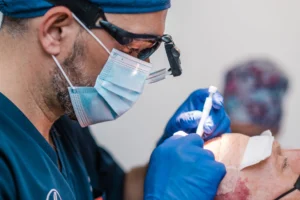
A FUE hair transplant for female pattern baldness is safe, minimally invasive and creates no visible linear scarring.

The results of a hair transplant, when performed by a medical expert, are healthy hair follicles that are natural-looking and aesthetically pleasing.

For female patients who wear their hair long, shaving lines of hair off the back of the head is a brilliant way to have a discreet hair transplantation.

fue hair transplant procedure in Glasgow Scotland by Dr Bonaros

About the Medical Reviewer

This content was written and medically reviewed by Dr. Epameinondas Bonaros, a hair restoration specialist based in Glasgow.

Dr. Bonaros is a GMC-Registered Doctor (No. 7566786), a Diplomate of the ABHRS, and a Full Member of the ISHRS. Dr. Bonaros personally performs every FUE procedure at his clinic to ensure the highest standards of safety and clinical excellence.

Last medically reviewed: December 2025

Other posts you may like

Are Hair Transplants Painful?

Are Hair Transplants Painful? Many patients worry about experiencing pain during a hair transplant. This anxiety may cause you to delay hair transplant surgery. We know that hair loss can be a harrowing experience. Luckily, the solution doesn’t have to be distressing. If you are holding off on getting a hair

Read More »
fue vs dhi sharp impanters direct hair implantation

FUE vs FUT Hair Transplant — What’s the Difference?

FUE vs FUT Hair Transplant — What’s the Difference? Follicular Unit Extraction (FUE) and Follicular Unit Transplantation (FUT) are two of the most common hair transplant methods. Popularised in the 1980s, FUT surgery is a more conventional procedure. However, scientific advances in the early 2000s led to the development of

Read More »
hair growth cycle hair loss treatments dr bonaros

The Hair Growth Cycle explained

The normal growth rate of scalp hair is one-fourth to one-half inch per month. Hair growth has a cyclic pattern that can be affected by a number of genetic, disease, medication or other factors to cause hair loss.

Read More »

Creatine and Hair Loss: The Truth Uncovered

Does Creatine Cause Hair Loss? The Myth vs The Facts Creatine is one of the most studied supplements for boosting athletic performance and muscle strength. Yet common concerns still arise, like “Does creatine cause hair loss?” A 2009 study fueled this belief by suggesting a potential link between creatine supplementation

Read More »