
The first two weeks: healing, not growing
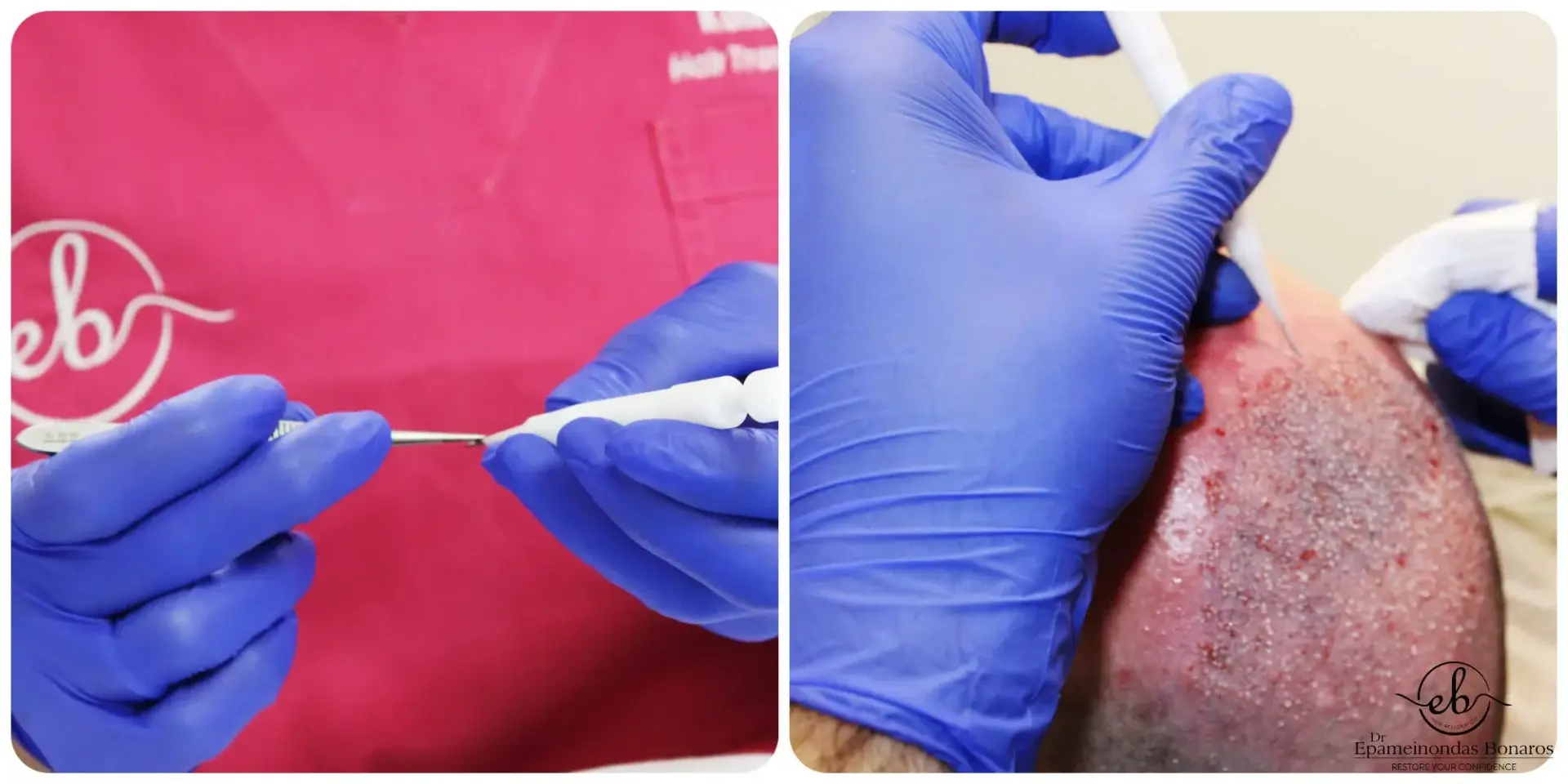
In the days immediately after your procedure, the priority is healing rather than growth. Tiny crusts form around each newly placed graft and the recipient area may feel tight or look pink. This is completely normal. The follicles are settling into their new home and establishing a blood supply, and how you care for them now matters more than at any other point in the journey.
During this window it helps to keep a few simple habits in mind:
- Sleep slightly elevated to reduce swelling around the forehead and crown.
- Wash gently and exactly as instructed — no scrubbing, picking or scratching at the crusts.
- Avoid strenuous exercise, saunas and swimming until you are cleared to return.
- Keep the area out of direct sun and skip hats that press on the grafts.
- Steer clear of alcohol and smoking, both of which slow healing.
Ready to begin your hair restoration journey?
Book a private consultation with Dr Bonaros to get a personalised treatment plan and honest, expert advice tailored to your hair loss.
Weeks 2–6: the shedding phase
Months 2–4: the dormant phase
Months 4–8: early regrowth
This is the stage most people look forward to. New hairs begin to emerge — fine, soft and sometimes a little wiry or curly at first. Growth is rarely uniform: some areas sprout ahead of others, which can make the coverage look patchy for a while. That unevenness evens out as more follicles join in.
A simple way to think about how the months map to your result:
- Months 0–1: healing and recovery, grafts secured.
- Months 2–6: shedding of transplanted hairs, then dormancy.
- Months 4–8: early regrowth begins to appear.
- Months 8–12: hairs thicken and density builds noticeably.
- Month 12+: full, mature result with natural texture.
Months 8–12: thickening and density
Around 12 months: full density
FAQ
Frequently asked
When will I see the final result?
Most patients see the bulk of their new hair between months six and nine, with the final result — full density and texture — settling at around twelve months. In some cases, the very last refinements continue up to fifteen or eighteen months.
Is it normal for the transplanted hair to fall out?
Yes, and it is expected. The transplanted hairs shed within the first two to six weeks while the follicle itself stays safely in place beneath the skin. This shedding phase is a sign the process is working, not a sign anything has gone wrong.
Can I speed up the regrowth?
There is no way to rush the body’s natural hair cycle, but you can protect it. Following your aftercare instructions closely, eating well, staying hydrated, avoiding smoking and managing stress all give your follicles the best possible environment to regrow on schedule.
Will the new hair look natural as it comes through?
Early regrowth can appear fine, wispy or slightly uneven — this is temporary. As each hair completes more growth cycles it thickens and matures, and by the twelve-month mark it blends seamlessly with your existing hair.