
Some of the most important of these non-AGA causes of hair loss are:
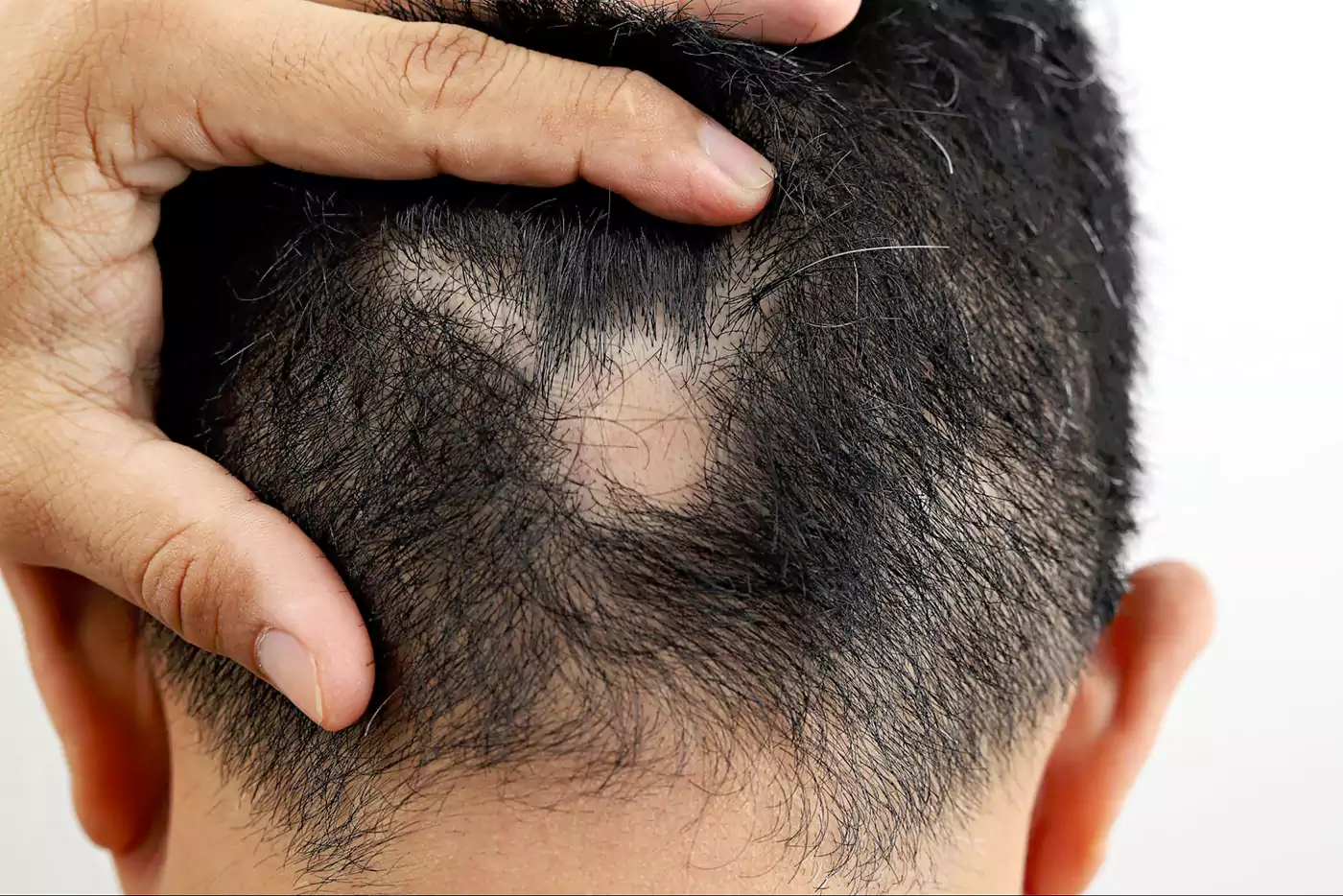
Alopecia areata—a possibly autoimmune disorder that causes patchy hair loss ranging from diffuse thinning to extensive areas of baldness with islands of retained hair.
Scarring alopecia—hair loss due to scarring of the scalp. A common cause of scarring alopecia is persistent tight braiding or corn-rowing of scalp hair. Over a period of time scarring may destroy hair follicles and result in permanent thinning. More severe scarring alopecia may be caused by physical cutting-ripping tearing injury to scalp skin or burn injury.
Telogen effluvium—a relatively common type of hair loss caused when a large percentage of scalp hair follicles are shifted into the “shedding” phase. An underlying cause may be hormonal, nutritional, or drug-associated.
Loose-anagen syndrome—a condition that occurs primarily in fair-haired persons. Scalp hair sits loosely in hair follicles and is easily extracted by normal combing or brushing. In some cases, the condition appears during childhood and improves in later life.
Triangular alopecia—a loss of hair in the frontal area of the scalp that sometimes begins in childhood. Hair loss may be complete in the frontal area or a few hairs may remain. It can look similar to early-stage AGA. The cause of triangular alopecia is not known but it can be successfully treated.
Trichotillomania—compulsive hair plucking. The condition ranges from idly plucking hair while reading or watching TV to ritualistic plucking of hair in specific patterns. Over time, trichotillomania can cause scarring alopecia and permanent hair loss. In adults, it is more common in women than in men. Hair loss due to trichotillomania usually cannot be successfully treated until underlying psychological or emotional conditions are treated successfully.
Scalp infections—bacteria, fungi and viruses can invade and damage hair follicles, causing hair loss. The infection must be diagnosed and treated before hair restoration can be undertaken.
Successful treatment is dependent on correct diagnosis. Always consult a hair restoration specialist before undergoing hair restoration treatment.
If you are exploring hair restoration solutions, contact us to book your consultation with Dr Bonaros
Excerpts copied from International Society of Hair Restoration Surgery, www.ISHRS.org, © 2004.
Are you experiencing noticeable thinning hair or hair loss?
Book a consultation with Dr Bonaros for a comprehensive assessment and tailored treatment plan.