

What is Male Pattern Baldness?
Male pattern baldness, or androgenic alopecia, is one of the most common hair disorders. It is characterised by androgen-related progressive male hair thinning in a defined pattern across the scalp. The hair follicle shrinks in size over time, ultimately resulting in a bald scalp.
- Around 40% of men will have noticeable hairline recession and hair loss by age 35.
- This figure increases to approximately 50% of men over 50 having noticeable hair loss.
- At 60 years old, about 65% have visible hair loss.
- The number rises further, with 80% affected by the age of 80.
As an androgen-dependent condition, male pattern baldness can present soon after puberty. Early-onset hair loss in men can cause significant psychological distress.
Male pattern hair loss results in low self-esteem, reduced confidence and distress in affected men, irrespective of age or stage of baldness.
What is the Cause of Male Pattern Hair Loss?
These are critical role players in male pattern baldness or alopecia:
- Genetic factors – inherited hair loss genes increase susceptibility.
- Androgens – male hormones, such as testosterone metabolite DHT, trigger hair follicle sensitivity.
- Medical conditions – certain health issues can contribute to hair loss.
Origin of the Misconception About Creatine Supplementation
Male pattern hair loss is associated with many genes. A novel study revealed more than 250 genetic locations associated with severe hair loss. Some of these genes provide instructions for making androgen receptors, allowing the body to respond appropriately to DHT and other androgens.
Studies suggest that this excessive activation of the androgen receptor in hair follicles leads to follicular miniaturisation through a progressively shorter anagen phase, resulting in hair that grows thinner and shorter hair follicles that may not penetrate the epidermis.
At What Age Does Male Pattern Baldness Start?
Early-onset male pattern baldness could start from the late teenage years or early twenties, but most men begin to lose hair during their 30s.
Typically, hair loss begins with thinning on the top of the head and a hairline that gradually recedes into an “M” shape. Once you start noticing signs of male pattern baldness, seeking a medical professional before your hair loss progresses is important.
Does Male Pattern Hair Loss Affect Everyone?
No. The progression rate of male pattern baldness differs from individual to individual, and variation is also observed in affected family members.
The temporal regions are usually the first places males experience hair loss, or androgenic alopecia. In some men, the hair loss stops there and never progresses. In other men, hair loss continues over other areas of the scalp.
While almost all Caucasian men will eventually face some degree of male pattern baldness, Asian men, East Asians in particular, have historically experienced the lowest incidence of hair loss in the world.
Are you experiencing noticeable thinning hair or hair loss?
Book a consultation with Dr Bonaros for a comprehensive assessment and tailored treatment plan.
What Does Male Pattern Baldness Look Like?
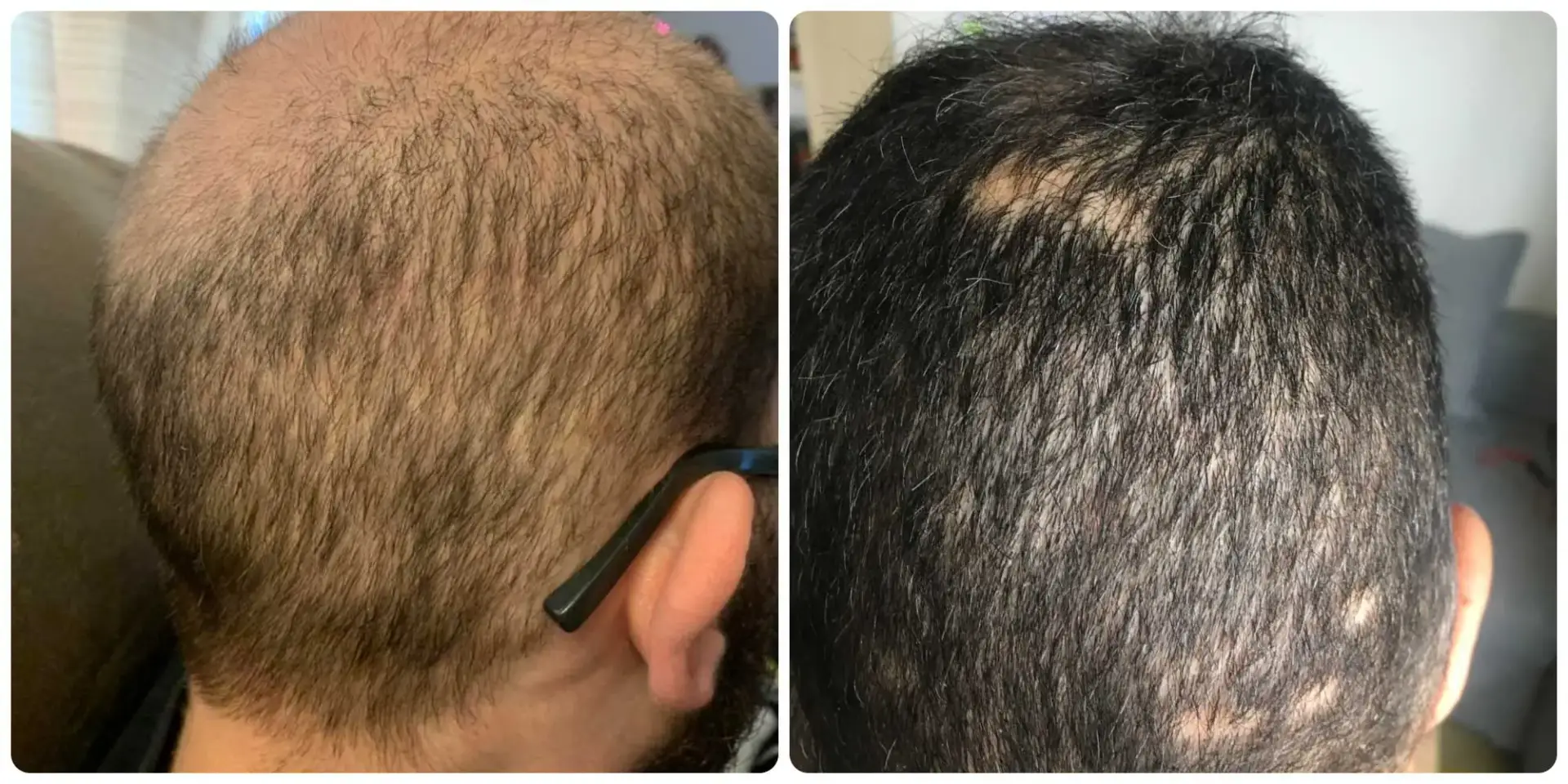
Hair thinning at the crown and temporal regions and a receding hairline are the first signs of pattern baldness.
Once you notice signs of excessive hair fallout, thinning or slow hair growth, seeking a professional to diagnose male pattern baldness is important. Receiving a diagnosis and early treatment can prevent complete baldness and shift the focus to growing healthy new hair.
How Does a Doctor Diagnose Male Pattern Baldness?
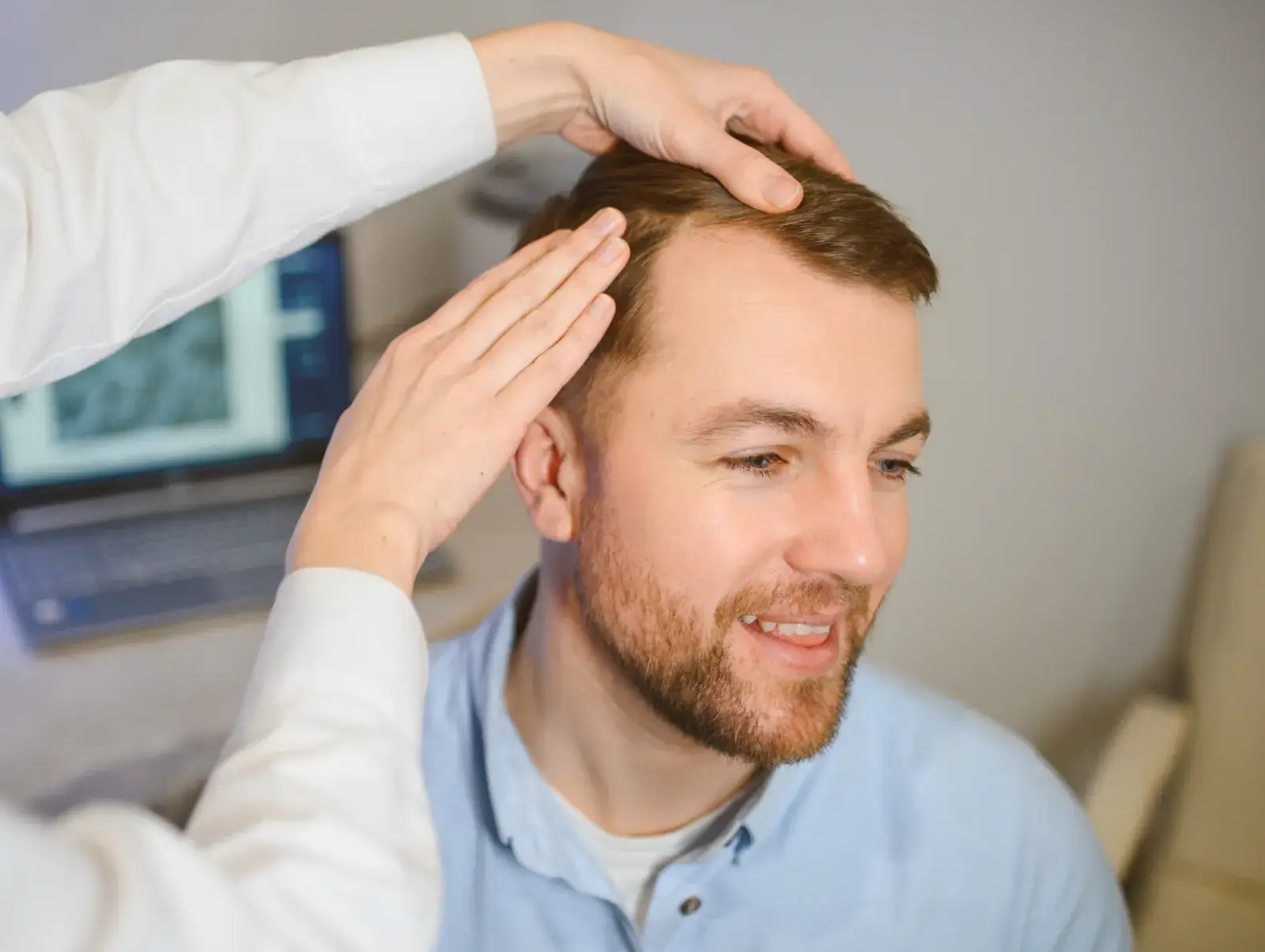
Getting specialised medical advice is essential when dealing with and treating hair loss. While androgenetic alopecia in men is the most common cause of hair loss, other conditions can contribute. These conditions may only be recognised once a physician or hair restoration specialist studies your medical history and diagnoses them.
Many types of male pattern baldness exist, and not all can be treated the same way. A complete medical evaluation ensures that each patient achieves the best long-term outcome.
Androgenetic alopecia is usually diagnosed clinically with:
- History of gradual onset after puberty
- Family history of baldness
- Dermoscopy is a non-invasive imaging tool that shows miniaturised hair and a few other signs of male pattern baldness.
Dermoscopy can help differentiate whether the hair loss comes from alopecia areata. A dermoscopy can help your specialist decide which male hair restoration options will be best for your needs and aesthetic goals.
Unless the diagnosis is unclear, a biopsy is generally unnecessary to find the right male pattern baldness treatment for you.
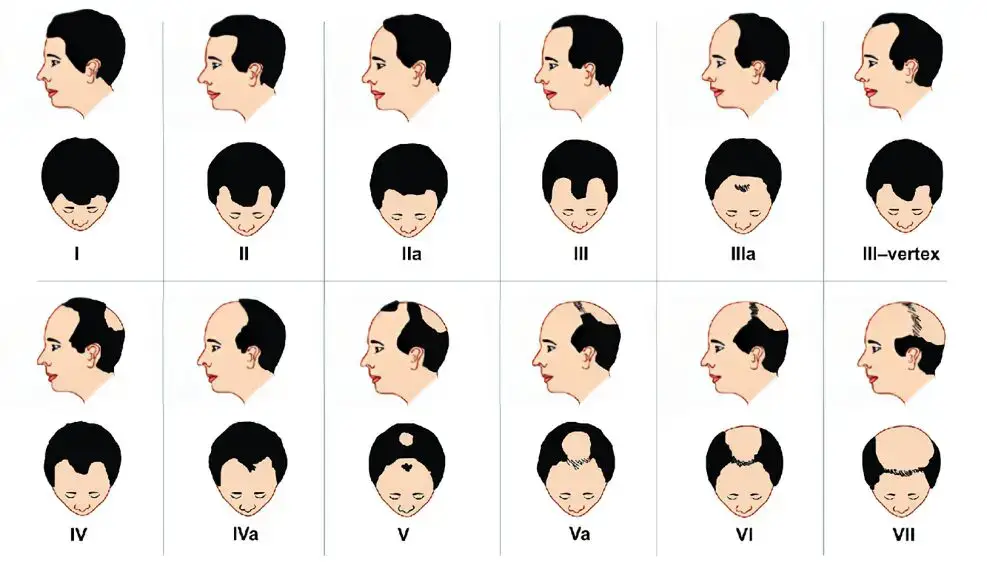
Male pattern hair loss occurs in various patterns illustrated in the Norwood-Hamilton Scale. Norwood classification is one of the most detailed classification systems for male-patterned hair loss.
Can You Prevent Male Pattern Baldness?
Men who struggle with hair loss often ask our team of hair loss specialists how to prevent male pattern baldness or how to stop male pattern baldness. Although prevention is better than a cure, hair loss is genetic.
That being said, early male pattern baldness has medical treatment options that slow down hair loss and hair breakage, and help regrow hair that has already been lost.
Taking oral hair loss medications and applying topical treatments like minoxidil to the scalp during the early stages of balding may help to lessen further hair loss. However, it may not be enough in some patients to prevent a bald spot from forming.
Every patient needs a personalised treatment plan, which is why you’ll need to get the advice of a hair loss specialist who can help you find the best solution for your male pattern baldness.
How Can We Stimulate the Hair Follicles for Growth?
Androgenetic alopecia, or male pattern baldness, more specifically, progresses over time. Although medical treatments like finasteride and minoxidil are effective in arresting the progression of the disease, they allow only partial hair restoration for men.
Some progress has been made in the medical management of androgenic alopecia and hair regrowth. That being said, the best treatment for male pattern baldness in the advanced stages is a FUE hair transplant, a minimally invasive hair loss solution for men.
How to Treat Male Pattern Baldness
Today, many promising male hair loss treatment options are available. There are safe and effective ways to restore your hair, whether your hairline is receding, your crown is losing thickness, or you have thinning hair all over your scalp.
The overall goal of men’s hair loss treatment in AGA is to:
- Arrest miniaturisation
- Stimulate hair growth
- Improve hair density
Hair Transplantation
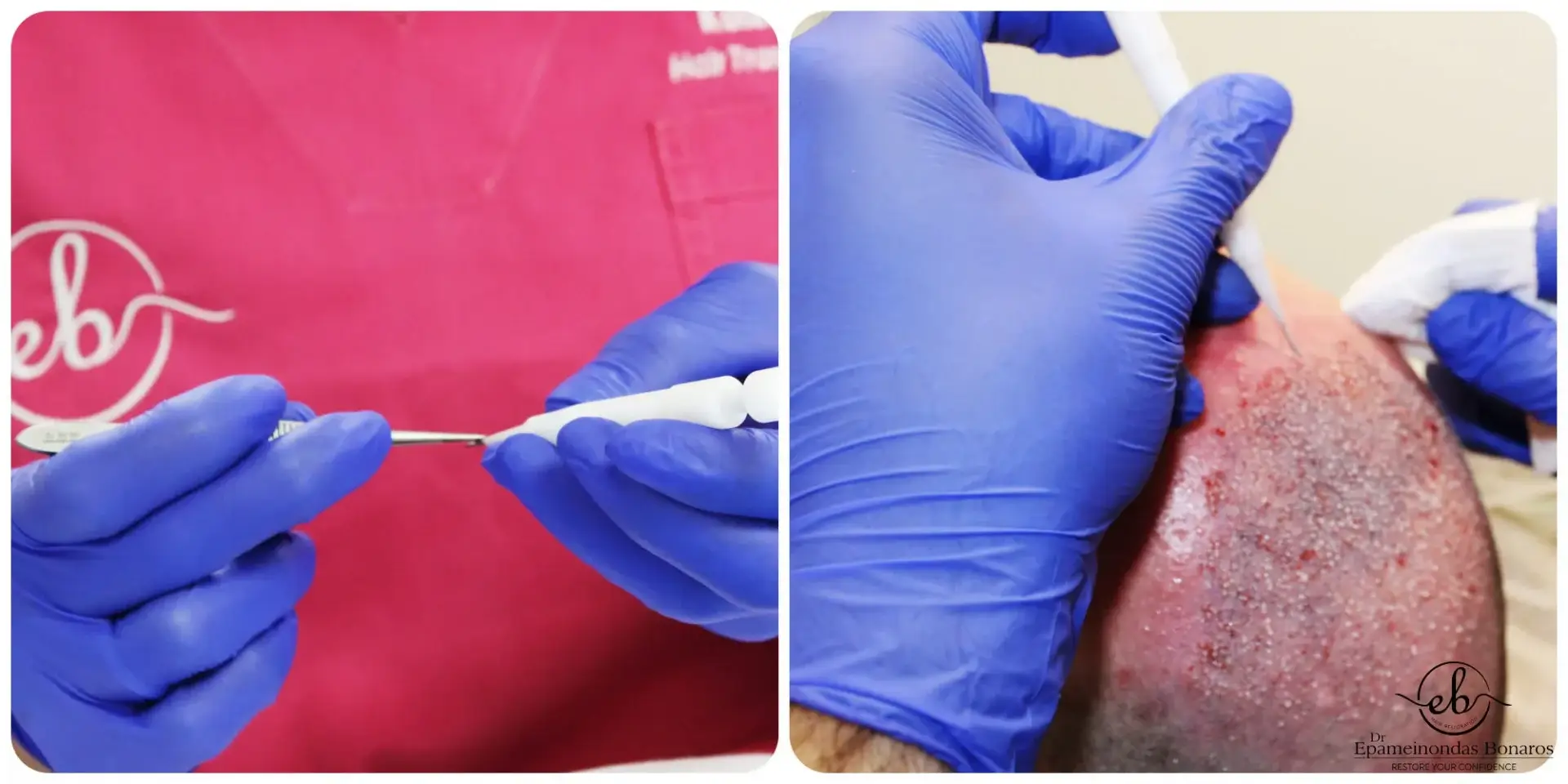
During a male hair transplant, a hair specialist removes healthy hair follicles from a donor region and implants them in balding areas on the patient’s scalp to increase hair density with natural-looking results.
While hair transplants have high success rates for male and female pattern baldness, they are highly specialised surgical procedures requiring the right doctor and medical team. Dr Bonaros performs the entire procedure as the lead surgeon with the use of advanced hair transplant technology and techniques.
Laser & Micro-Needling Treatments
Low-level laser therapy and micro-needling may also help ward off male pattern baldness, especially in combination with pharmacologic therapies. Additional studies are required to define and validate optimal treatment protocols that slow hair loss.