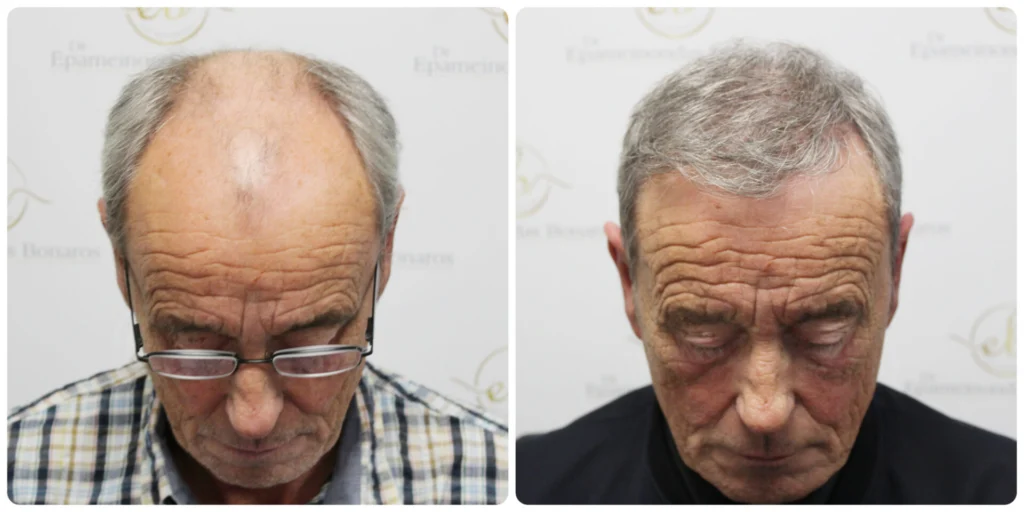
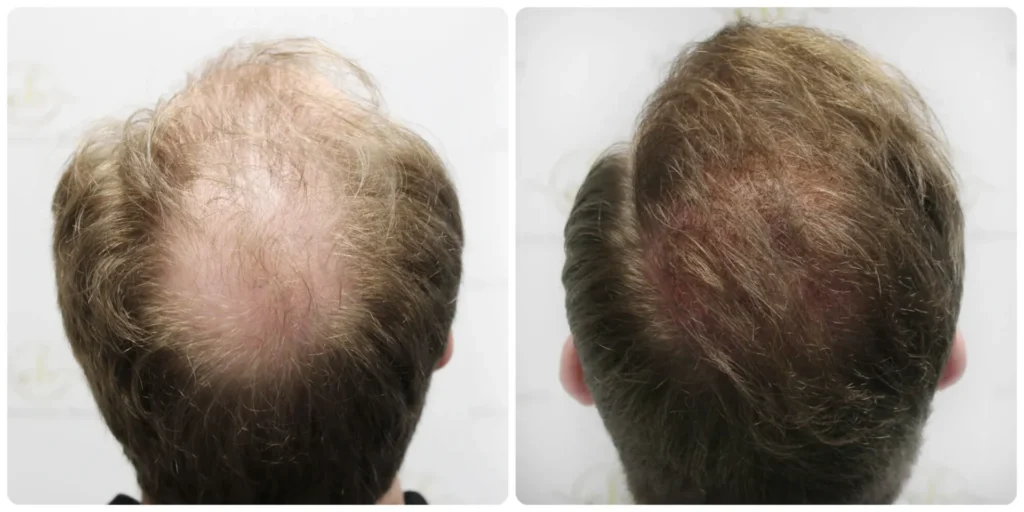
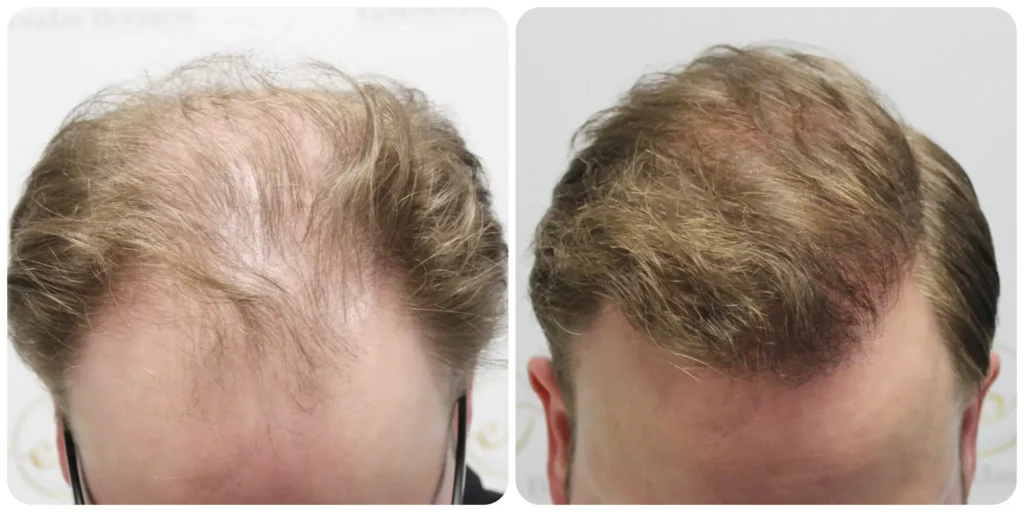
Any treatment for hair loss in women is based on the cause behind it. While the type of hair loss experienced will differ from person to person, here are some of the issues we often see patients affected by:
Androgenetic Alopecia
Androgenetic alopecia, also commonly known as female pattern hair loss (FPHL), is the most common cause of women’s hair loss. It can occur at any time during your teenage years through to middle and old age.
Differing rather significantly from the pattern caused by male pattern baldness, female pattern hair loss causes thinning on top of the scalp. A female pattern hair loss diagnosis typically considers family history, the pattern of thinning or shedding, and a doctor’s observations during the assessment.
Alopecia Areata
Alopecia areata is a common autoimmune disorder that causes sudden patchy hair loss as a result of the immune system attacking the hair follicles.
While this condition may start out as one or more bald patches, it can begin to overlap and affect large areas of the scalp.
Cicatricial Alopecia
Referring to a group of conditions, cicatricial alopecia causes irreversible hair loss. Cicatricial alopecia creates inflammation, which destroys the hair follicle, leading to hair loss and the creation of scar tissue.
Frontal Fibrosing Alopecia (FFA)
Destroying the follicles, frontal fibrosing alopecia (FFA) is a form of cicatricial alopecia that will often cause a thin band of balding skin that runs along the hairline’s front and sides.
Telogen Effluvium
This form of hair loss is fairly common and occurs when a large number of follicles on the scalp are shifted into the “shedding” phase of the hair growth cycle.
Possible underlying causes may be nutritional, stress, hormonal or drug-associated.
Anagen Effluvium
Anagen effluvium is a form of non-scarring alopecia and refers to hair shedding that occurs during the growth stage of the hair cycle.
This form of hair loss is caused by a sudden injury to the follicles from either an internal or external bodily cause and is common among those receiving chemotherapy.

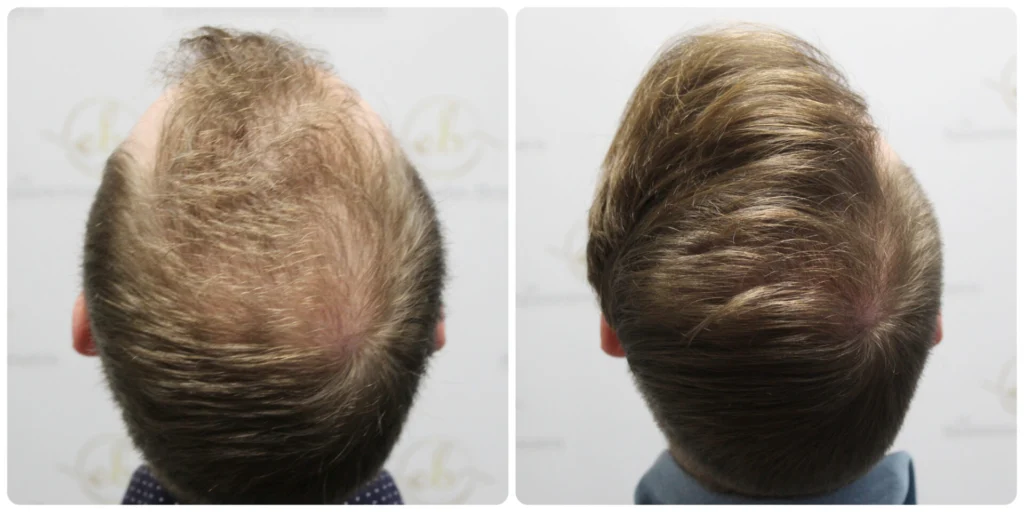
A case of Telogen Effluvium