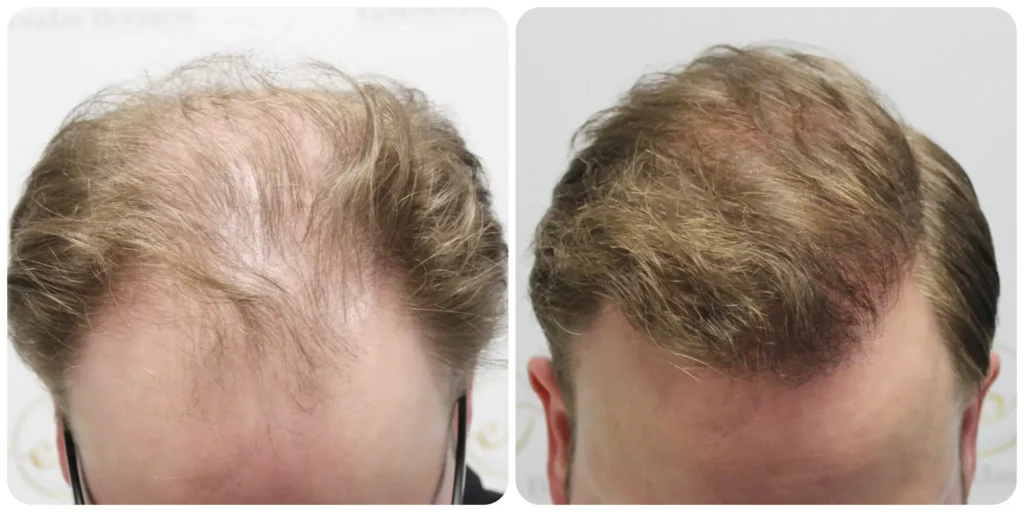
Chat with us on WhatsApp

Hairline Transplant - Frontal Hair Transplant

Androgenetic alopecia is the most common type of hair loss in the UK for men and women, affecting about 50% of men over 50 and 50% of women over 65. It typically presents as a receding hairline and thinning of the crown in men and diffuse thinning of the crown in women. 

Dr Bonaros offers a crown transplant using the FUE method at his hair transplant clinic in Glasgow. He also offers a popular 2 day full hair transplant procedure that combines any two treatments (crown hair transplanthairline transplanttemples hair transplant, or mid-scalp hair transplant).

Dr Bonaros is a GMC-Registered Doctor (GMC No. 7566786)Verified ABHRS Diplomate, and a Full Member of the ISHRS. He personally performs each step of the procedure to ensure it’s done with precision.

Book a consultation or fill in our online assessment form to find out if you are a good candidate for a frontal hair transplant.

Table of Contents

What is a Hairline Transplant?

The frontal hairline is arguably the most noticeable feature of a head of hair. This is why many women and men who begin to lose hair around their hairlines and temple area seek out a safe, permanent solution to restore a fuller head of hair.  

The most common cause of hair thinning is androgenetic alopecia (female or male pattern hair loss). Often also referred to as androgenetic alopecia, it has a balding pattern that lifts a hairline. 

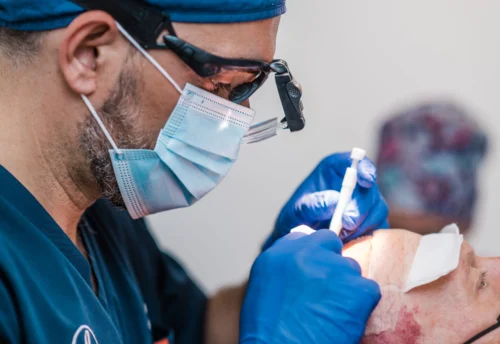
A Follicular Unit Extraction (FUE) transplant is a minimally invasive surgical procedure to treat thinning hair and promote dense hair growth. 

  1. Under local anaesthesia, individual hair follicles are extracted from the back of your head.

  2. These healthy hair follicles are then transplanted to fill balding spots on the hairline or to lower or reshape it.  

How We Create a Natural-Looking Hairline

Planning a hair transplant for a receding hairline involves deciding on a natural-looking hairline position on the forehead. To do this, we must consider several factors, including: 

  • Patient’s preferences

  • Thickness of the donor hair

  • Hair type

  • Current and anticipated stage of hair thinning or balding

  • Shape of the face

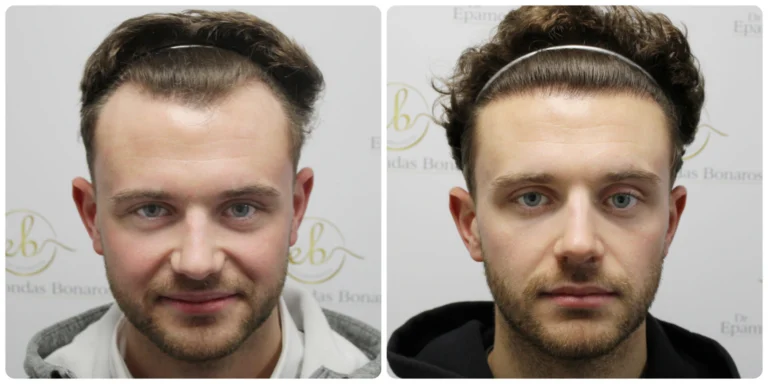
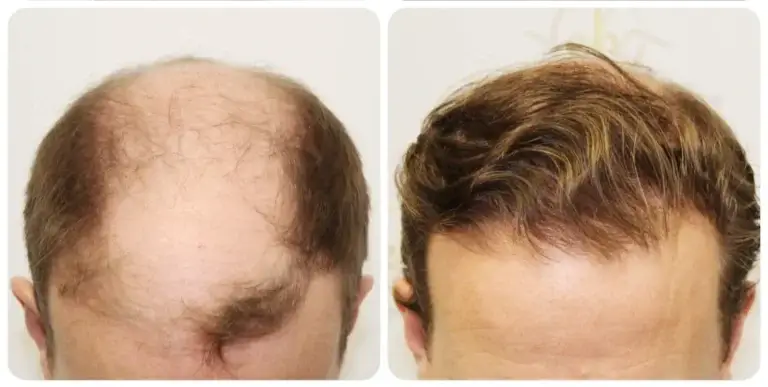
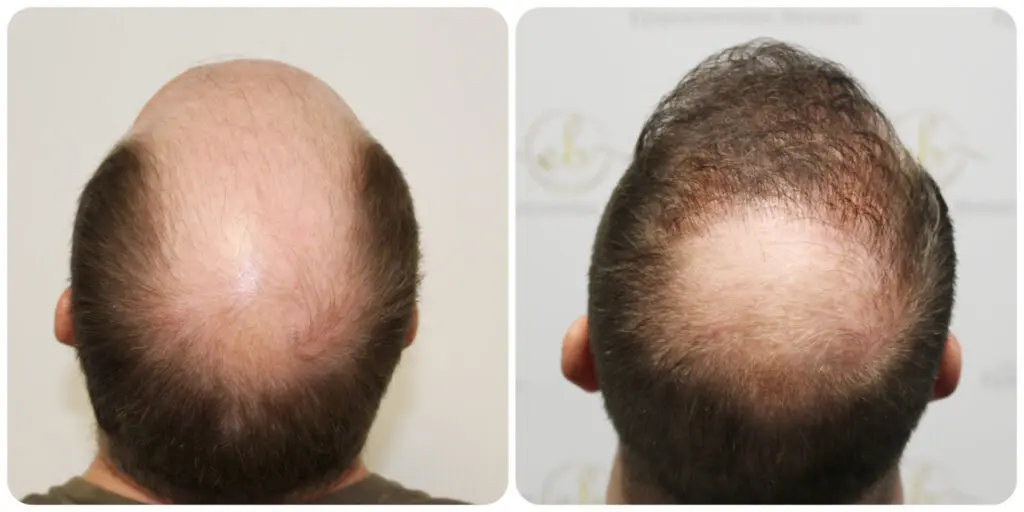
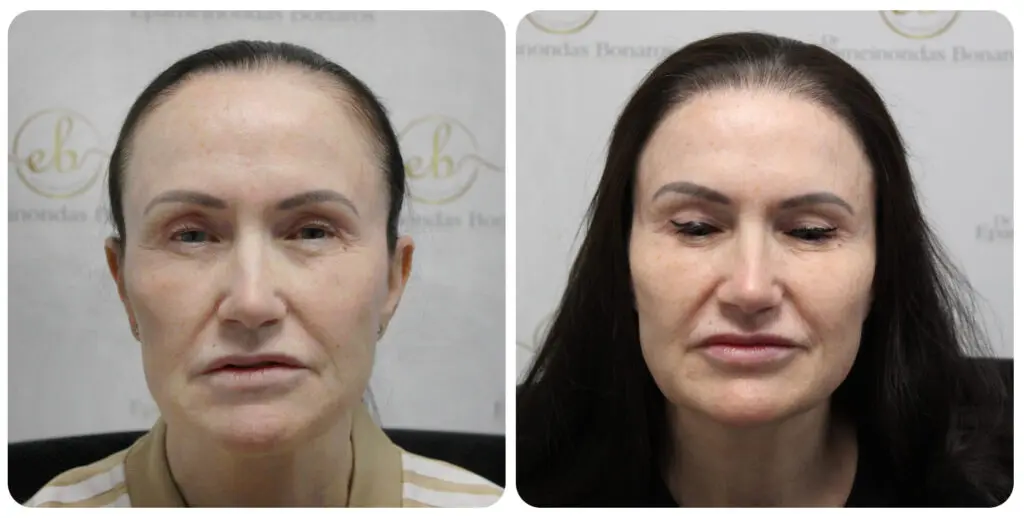
By performing an FUE hair transplant with natural hairline positioning, Dr Bonaros aims to sculpt an unnoticeable new hairline. This provides a sustainable result, from the new hair growth phase that starts around 3 months into your hairline transplant recovery to 20 years down the line.

These are some of the principles we use to achieve natural hair transplant hairlines that are tailored to each patient:

best hair transplant result for temporal recession

Imperfection is Key

Even the thickest hairlines and those with little to no hair loss will showcase natural imperfections. From corners of slight recession and differing heights to V-shaped widow’s peaks, hairlines are never perfectly symmetrical ovals.

In cosmetic surgery, achieving symmetry and avoiding unevenness or irregularity is typically the primary aim. However, in both frontal male and frontal female hair transplants, a perfectly even, straight hairline can result in a wig-like, unnatural look. A touch of intentional asymmetry is an essential factor for inconspicuous hair transplantation.

To achieve a natural-looking hair transplant, Dr Bonaros disperses several individual hairs irregularly across the hairline. Unlike a perfectly straight hairline hair transplant, these asymmetrical transplanted hair follicles create a more authentic impression.

Long-Term Perspective

Typically, if you are younger or have more severe hair loss, your hairline transplant results should be more conservative. The reason for this goes beyond a limited donor supply.

We need to account for the possibility that the patient’s hair loss will progress with age. This means future additional procedures might be required to address areas behind the initial hair implants for a receding hairline.

Whether performing male, female, or MtF hairline surgery, Dr Bonaros aims to create a new hairline that looks as attractive and age-appropriate from the get-go as it does thirty years down the line. Whether considering a hair transplant for a widow’s peak that is receding or a treatment for male pattern baldness, it’s key to remember that hairline transplants are permanent procedures.

A flat, low hairline that appears suitable on a young person may start to look unnatural as they grow older. This is especially crucial for young men, where a conservative design is often necessary for a hair transplant in the frontal and temple areas of the scalp.

Lower is Not Always Better

In instances where a patient has a family history of low hairlines, minimal or stable hair loss, or a facial shape that suits lower hairline designs, a lower hairline may be appropriate.

However, when combating a receding hairline, most patients should avoid a drastically low hairline transplant. We do not recommend this approach for young patients who are predisposed to aggressive future hair loss, older patients in the advanced stages of hair loss with limited donor hair available, or patients with wider facial shapes.

In cases such as those outlined above, Dr Bonaros will typically recommend a more conservative hairline transplant, striving for a slightly higher new hairline after surgery.

For men’s hairline transplants, a more mature hairline with a degree of temporal recession will usually create an age-appropriate, natural-looking result that suits most men for their whole life. Often, for men’s and women’s hairline transplant procedures, a more youthful appearance is achieved by not lowering the hairline but rather making it thicker in its current position.

Balancing Your Hairline with Your Facial Features  

When it comes to hairline positioning and facial aesthetics, everything comes down to ratios and proportions. The hairline position is not a fixed distance from your eyebrows.

Some clinics use a cookie-cutter approach for every hair transplant of the front hairline. They may opt for a basic oval hairline shape for every patient, regardless of the patient’s facial shape or feature ratio.

As a highly experienced female and male hairline restoration surgeon, Dr Bonaros has the expertise to design a personalised hairline that matches the natural contours of your face to create a more aesthetically pleasing end result.

Patient Testimonials

Benefits of the FUE Method

The FUE implantation surgical method offers a number of advantages compared to the traditional FUT (follicular unit transplantation) hair transplant surgery. These benefits include: 

  • A sutureless, minimally invasive procedure

  • Virtually no visible scarring and no linear scar

  • Natural results that allow you to wear your hair very short if you like

  • High-density coverage for your hairline area

  • Minimal discomfort during the surgical procedure

  • A quicker recovery time in a few weeks 

How a Frontal Hair Transplant is Done

Before your FUE receding hairline treatment, Dr Bonaros and his team will explain the entire hair transplant timeline to you in detail.

In alignment with the International Society of Hair Restoration Surgery (ISHRS), each step of your receding hairline transplant and hairline design will be performed using only the highest international standards.

Here’s how a hairline hair transplant works: 

Before a hairline transplant for female or male patients, the hair in the donor area (usually on the back and sides of the head) is clipped to a number 0 to prepare for the harvesting of hair grafts.

During the consultation, we use a trichoscope to capture images of the hair follicles. The trichoscope is an advanced digital camera that combines multiple ultra-bright LEDs with a high-magnification polarising lens. We can then identify your hair’s unique characteristics, such as the diameter of the hair shaft, curl pattern, hair growth direction and angle, and the proportion of hair per graft. This information allows us to make data-based decisions and create strategies that are tailored on a microscopic level to each individual patient.

A FUE hair transplant to the lower hairline starts with the extraction of healthy hair follicles using surgical micro-punches that make incredibly small incisions in the scalp. The size of these is tailored to each patient’s hair characteristics to minimise trauma, avoid a very noticeable scar, and increase the hair follicles’ viability for transplantation.

The hair grafts are always harvested in a random pattern, with adequate spacing between donor sites. A small percentage of the hairs from the donor area will be removed, ensuring natural-looking results that are unnoticeable to the naked eye.

The harvested grafts are placed in a petri dish, wherein we meticulously evaluate and classify each follicle under high-magnification stereo microscopes that produce a 3D image.

To ensure the highest possible graft survival rate, we store the follicles in a chilled HypoThermosol®  solution. HypoThermosol® is a storage solution that has been shown to optimise the biopreservation of the hair follicles and increase donor hair viability before they are implanted

We use the direct implantation method for our hairline implants. Rather than regular forceps, we utilise a sharp hair implanter pen to design each new hairline. 

We do not rely on reusable, traditional Choi implanter pens. Instead, Dr Bonaros uses high-quality, single-use implanters that deliver greater efficiency, safety, and superior performance with precision.

The implanter pens give Dr Bonaros complete control over the density, depth, angle and direction of the hair follicles. When compared to hair plugs, an early type of hair transplant method that can result in transplanted hair with an unnatural, doll-like appearance, this allows for an incredibly natural hairline restoration. 

This method also streamlines the hairline transplantation procedure, as it does not require premade incisions on the frontal scalp.

Frequently Asked Questions

Explore our FAQs on hairline hair transplants for a better understanding of the process and recovery.  

The cost of a hair transplant varies from case to case, depending on how many grafts are needed and the overall complexity of your case. We charge approximately £4 per graft; however, this is a guide, and we always strive to keep pricing transparent and straightforward.

Hair Transplant Cost in Glasgow

Yes, there are effective non-surgical options that can help slow recession, support healthier growth, and in some cases, improve coverage in the areas where you experience hair loss. These treatments are often used on their own or in combination with a hairline procedure, depending on how much hair needs support.

Common non-surgical treatments include:

  • Minoxidil to improve circulation so that hairs grow more strongly and properly

  • Dutasteride to reduce dihydrotestosterone and protect vulnerable follicles

  • Finasteride to slow further recession and support long-term scalp health

During your first appointment, we will assess the extent of your hair loss and discuss your goals. We will create a personalised treatment plan, which may include prescription medication, a hairline-lowering hair transplant or a hybrid strategy to determine the best outcome for you.

Recovery after hairline transplant surgery generally follows the same pattern for all FUE techniques that involve extracting hair follicles. We assess plans on a patient basis, but most patients can expect the following timeline.

Day of the Operation

Tightness and mild swelling may appear at the back of your head and around the tiny incisions. Redness is completely normal.

First Few Days

Light soreness, irritation and small scabs develop as healing starts. You can return to gentle activity. Avoid touching the area. Your existing hair usually provides enough coverage for the first areas treated.

Days 4–10

Redness and swelling settle. Scabs soften and fall off with proper aftercare. Short hair or longer styles both help cover healing areas.

2–3 Weeks

Some transplanted hairs shed. This is a normal stage of the cycle. Your original hair remains resistant.

1 Month

The scalp healing process is complete, and all normal activities can resume.

3–4 Months

Early signs of new growth appear. These fine hairs show good progress and reflect the importance of precise techniques.

5–9 Months

Hair becomes thicker and stronger. Many cases show clear improvement as new hairs begin to cover the hairline and temple areas.

12–18 Months

The final result settles. Full results usually appear within this period as the hair matures.

If anything worries you or does not seem completely normal, it is advisable to speak with your doctor. For further advice or guidance, contact our dedicated team.
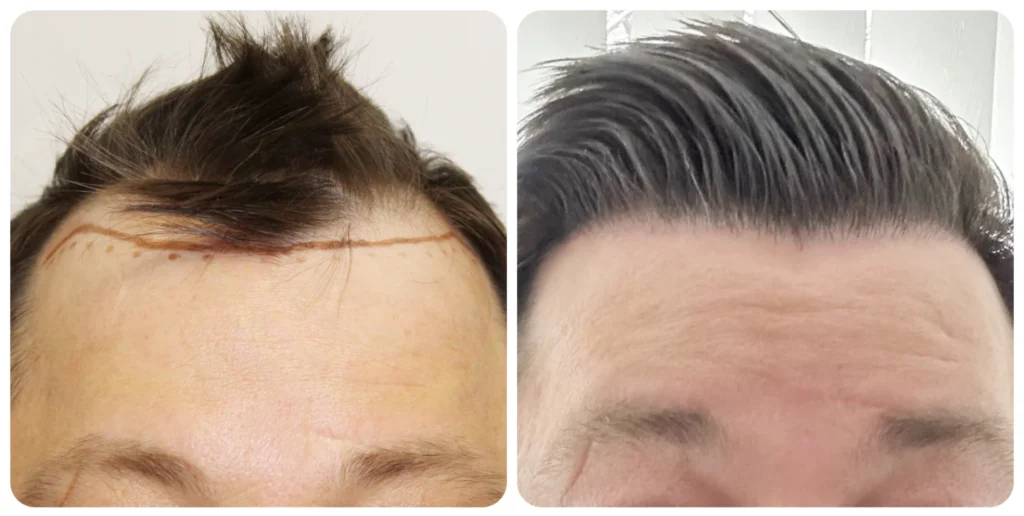
Case Studies

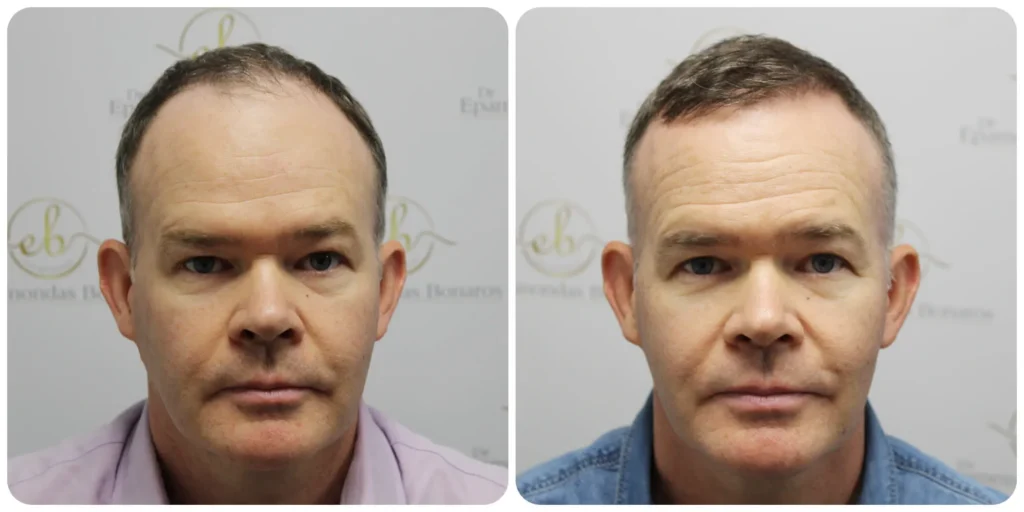
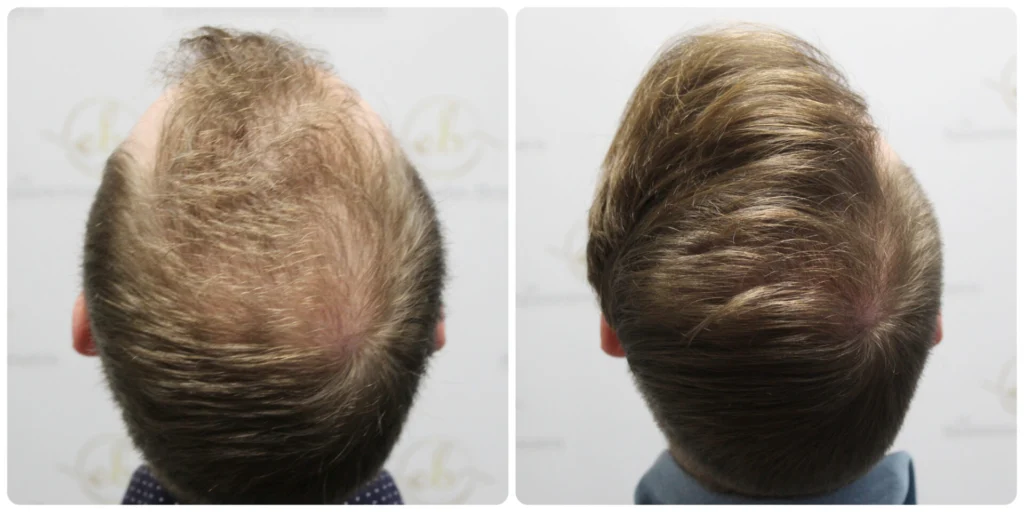
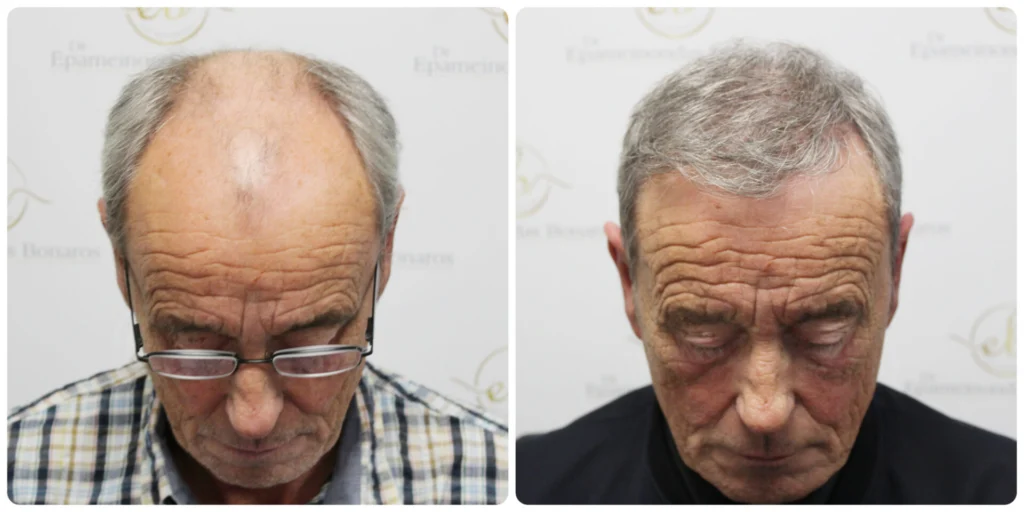
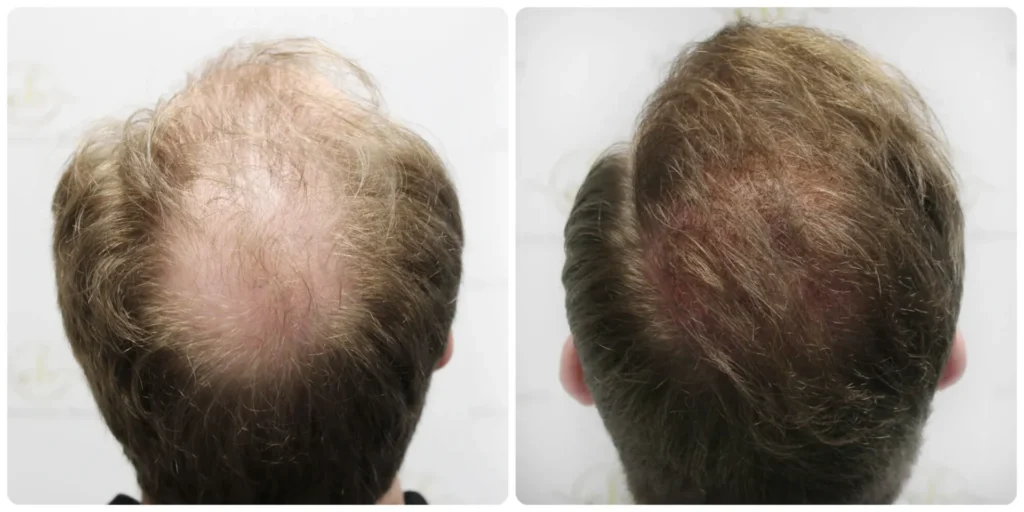
Book a consultation with Dr Bonaros to discuss if a hairline transplant using FUE is right for you.

About the Medical Reviewer

This content was written and medically reviewed by Dr. Epameinondas Bonaros, a hair restoration specialist based in Glasgow.

Dr. Bonaros is a GMC-Registered Doctor (No. 7566786), a Diplomate of the ABHRS, and a Full Member of the ISHRS. Dr. Bonaros personally performs every FUE procedure at his clinic to ensure the highest standards of safety and clinical excellence.

Last medically reviewed: December 2025

Our Accreditations

Related Posts

The Latest Hair Transplant Technology & Treatments

The Latest Hair Transplant Technology & Treatments Some of the latest hair transplant technologies

Are Hair Transplants Permanent?

Are Hair Transplants Permanent? Are hair transplants permanent? While hair transplants were developed as a

Hair Shedding After a Hair Transplant: What You Need to Know

Hair Shedding after a Hair Transplant: What You Need to Know It’s understandable to feel concerned when

Does FUE Hair Transplant Surgery Leave Scars?

Does a FUE Hair Transplant Leave Scars? If you’re considering a hair transplant, one of the most common